
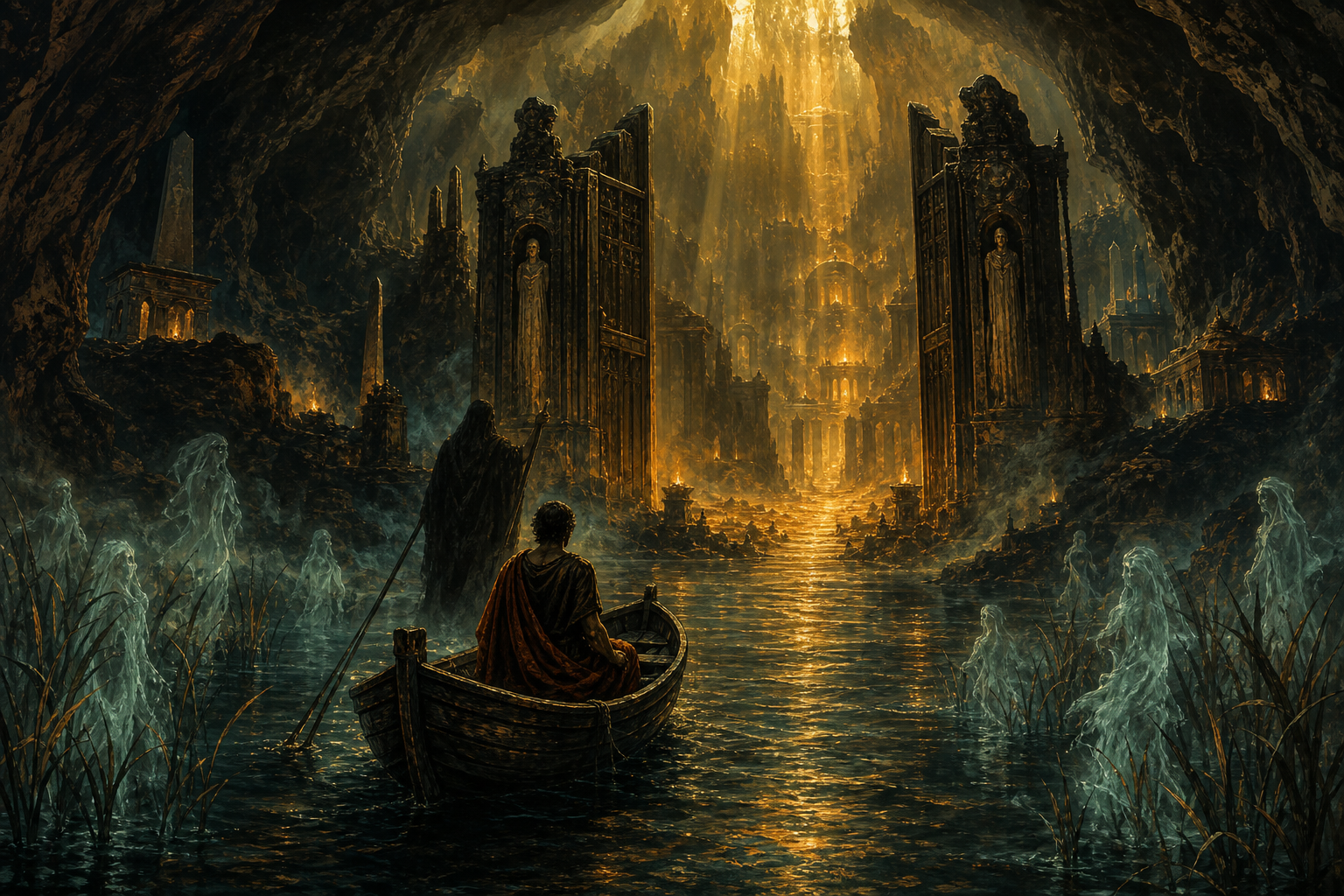
Inanna Turns Toward the Great Below
Inanna, powerful goddess of love, fertility, and war, decided to descend from her realm into the underworld ruled by her sister Ereshkigal. The surviving poem gives a reason connected with funeral rites, but Inanna’s intention remains dangerous and difficult to interpret. No visitor could simply enter the Great Below and leave unchanged.
Before departing, Inanna instructed her faithful minister Ninshubur to seek help if she did not return. She dressed in signs of divine authority: crown, jewelry, garments, and other powers that marked her status.
The Seven Gates
At the outer gate, Inanna demanded entry. Ereshkigal ordered the gatekeeper to admit her according to the laws of the underworld. At each of seven gates, the gatekeeper removed one part of Inanna’s regalia.
Inanna objected, but each time she was told that the ways of the underworld must not be questioned. Gate by gate, she lost her crown, ornaments, measuring rod, and clothing. The goddess who entered in splendor arrived before Ereshkigal stripped of every visible claim to power.
The judges of the underworld passed judgment. Inanna was killed, and her body was hung on a hook. With her death, fertility and sexual life on earth ceased.
Enki’s Rescue
After three days and nights, Ninshubur followed Inanna’s instructions and sought divine aid. Enlil and Nanna would not interfere with the laws of the underworld. Enki, god of wisdom and fresh water, responded differently.
From beneath his fingernails, Enki created two small beings. He gave them the food and water of life and instructed them how to approach Ereshkigal. They found the queen of the underworld in anguish and echoed her cries rather than judging or challenging her. Grateful to be understood, Ereshkigal offered them a gift. They asked for Inanna’s body.
The beings sprinkled it with the food and water of life. Inanna rose.
The Price of Return
The underworld did not release anyone without a substitute. Demons accompanied Inanna as she returned, ready to seize another in her place. They proposed taking Ninshubur and others who had mourned her, but Inanna refused.
Then she found her husband Dumuzid seated in fine clothing rather than grieving. Angered, she allowed the demons to take him. Other compositions expand the story: Dumuzid flees, and his sister Geshtinanna mourns and offers to share his fate. An arrangement is reached in which brother and sister spend alternating portions of the year below.
What the Descent Means
Inanna’s journey is not a simple heroic conquest of death. She enters with power, is reduced to helplessness, and survives because Ninshubur acts faithfully and Enki responds with wisdom. Even resurrection carries a cost.
The myth has often been connected with seasonal change, ritual, kingship, and the limits of power. Its emotional center may be the encounter with grief: Enki’s creatures succeed because they listen to Ereshkigal’s pain.
The Sumerian descent and a later Akkadian account involving Ishtar are related but distinct. Surviving tablets are ancient literary works with textual gaps and scholarly debates, so modern retellings should not erase their differences.
Wikipedia Sources
This original retelling is based on Inanna, Inanna’s Descent into the Underworld, and Ereshkigal on Wikipedia.